
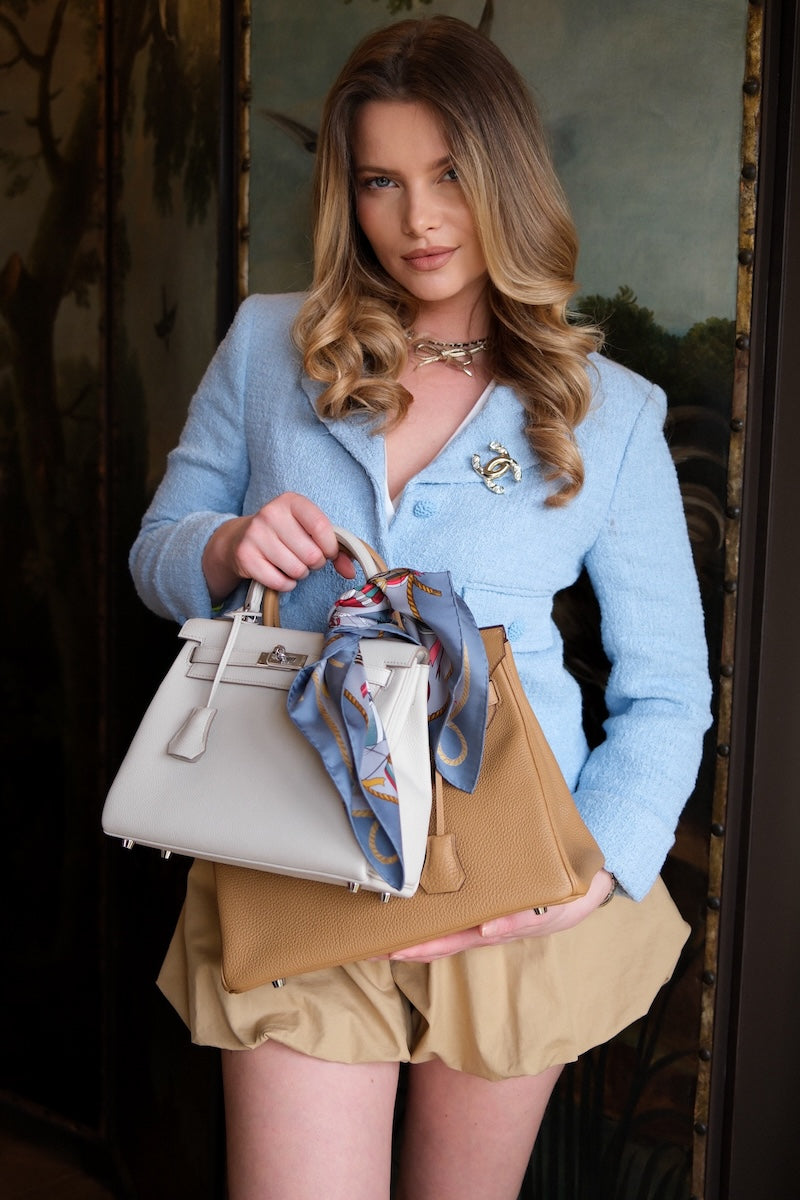


Smooth leathers vs grained leathers at Hermès
Complete overview, advantages, disadvantages, and uses
At Hermès, leather is never just a material: it's a signature. Each type of leather has its own characteristics, influencing the aesthetics, durability, feel, and value of a bag, especially in the second-hand market.
Understanding the difference between smooth leathers and grained leathers, and knowing their variations, is essential for making an informed choice.
Hermès Smooth Leathers: Elegance, Finesse, and Patina
Smooth leathers are distinguished by a uniform surface, often a silky feel, and a very elegant finish. They are generally more sensitive to wear but offer incomparable aesthetics.

Box Calf: Hermès' historic leather, shiny and refined.
Advantages
-
Timeless elegance
-
Remarkable patina over time
-
Highly sought after for classic models
Disadvantages
-
Sensitive to scratches
-
Marks easily


Swift: Smooth and supple leather with a velvety feel.
Advantages
-
Very soft touch
-
Intense colors
-
Modern look
Disadvantages
-
Marks quickly
-
Less structured for large formats


Evercolor: Smooth, slightly satiny leather
Advantages
-
Chic and discreet appearance
-
Good hold
Disadvantages
-
Sensitive to wear
-
Less common


Barenia: Natural untreated leather, historically used in saddlery.
Advantages
-
Spectacular patina
-
Very lively
Disadvantages
-
Very sensitive to water and stains
-
Delicate use


Vache Naturelle: Untinted light leather that develops a unique patina.
Advantages
-
Exceptional patina over time
-
Authentic and lively appearance
-
Unique evolution for each piece
Disadvantages
-
Very sensitive to stains
-
Marks easily
-
Requires careful maintenance


Hermès Grained Leathers: Resistance, Structure, and Daily Use
Grained leathers offer better resistance to wear. They are often preferred for bags carried regularly.

Togo: The iconic Birkin leather.
Advantages
-
Very resistant
-
Good hold
-
Less sensitive to scratches
-
Can stretch over time


Taurillon Clemence: Thicker and more supple than Togo.
Advantages
-
Supple feel
-
Casual look
Disadvantages
-
Can slouch
-
Heavier


Epsom: Embossed leather, very structured.
Advantages
-
Lightweight
-
Very resistant
-
Excellent Sellier hold
Disadvantages
-
Less natural feel
-
Limited patina


Chevre Mysore: Fine and lightly grained goat leather.
Advantages
-
Very resistant
-
Lightweight
-
Vibrant colors
Disadvantages
-
Stiffer feel


Chèvre Chamkila: Fine, luminous, and delicately grained goat leather.
Advantages
-
Very lightweight
-
Fine and regular grain
-
Slightly shiny surface
-
Good scratch resistance
Disadvantages
-
Less supple
-
Less suitable for large formats


Barenia Faubourg: Modernized and lightly grained version of Barenia.
Advantages
-
More resistant than Barenia
-
Beautiful patina
Disadvantages
-
Still sensitive compared to grained leathers


Vache Liégée: Robust leather with a distinctive natural grain.
Advantages
-
Very resistant
-
Excellent durability
-
Deep grain
-
Less prone to sagging
Disadvantages
-
Rustic appearance
-
Less supple
-
Rare production


Vache Ardenne: Ancestor of Togo, structured leather with a round and regular grain.
Advantages
-
Very good rigidity
-
Perfectly maintains its shape
-
Elegant, distinctive grain
-
Good overall resistance
Disadvantages
-
Less supple than Togo
-
Slightly shinier
-
Leather now discontinued


Fjord: Large and pronounced grain.
Advantages
-
Excellent resistance
-
Ideal for heavy use
Disadvantages
-
Less formal aesthetic


Courchevel: Ancestor of Epsom, now discontinued.
Advantages
-
Very structured
-
Lightweight
Disadvantages
-
Weak patina
-
Drier leather


Exotic Leathers (smooth & grained)
Exotic leathers occupy a category of their own, combining rarity and savoir-faire.

Porosus Crocodile: The most prestigious exotic leather
Advantages
-
Extremely luxurious
-
Symmetrical and refined scales
-
Very high market value
-
Excellent durability
Disadvantages
-
Very expensive
-
Requires specialized maintenance


Niloticus Crocodile: Exotic leather with slightly wider and more natural scales.
Advantages
-
More wild and organic look
-
Beautiful luster
-
Highly sought after in collections
Disadvantages
-
Less symmetrical than Porosus
-
High price
-
Delicate maintenance


Mississippiensis Alligator: American alligator with large and regular scales.
Advantages
-
Larger and more graphic scales
-
Structured appearance
-
Excellent durability
-
High market value
Disadvantages
-
Less refined visually than Porosus
-
Very high price
-
Specialized maintenance recommended


Lizard: Exotic leather with small, fine, and very delicate scales.
Advantages
-
Extremely refined
-
Lightweight
-
Very luminous
Disadvantages
-
Very fragile
-
Can dry out
-
Sensitive to humidity


Varan: Exotic leather with small, flat, and regular scales.
Advantages
-
More resistant than lizard
-
Elegant and discreet texture
-
Less fragile than some exotic skins
Disadvantages
-
Less prestigious than crocodile or alligator
-
Can mark at folds
-
Production is rarer today


Ostrich: Exotic leather recognizable by its emblematic follicles.
Advantages
-
Very supple
-
Relatively scratch-resistant
-
Iconic texture
-
Develops a beautiful color depth
Disadvantages
-
Can stretch over time
-
Very distinctive appearance that not everyone likes
-
High price


Conclusion
At Hermès, there is no universal “best” leather, but rather leathers adapted to different uses and sensitivities. Understanding their specificities allows one to choose a bag that perfectly matches their lifestyle — and preserves its value over time. At Houlux, each leather is analyzed and presented with precision to guide our clients in an informed and sustainable choice.


